
Enhancing Tram Wheel Bearing Performance
Executive Summary
An original equipment manufacturer (OEM) in the rail transportation sector experienced recurring failures with spherical roller bearings using steel cages in their tram wheel applications. After thorough analysis of operating conditions, BMI Engineering recommended transitioning to brass cage spherical roller bearings. The solution successfully extended bearing life by 60%, enhancing resistance to extreme loads and shock conditions encountered in tram operations.
Customer Background
Our client, a leading tram manufacturer, supplies rolling stock to public transportation authorities worldwide. Their vehicles operate in diverse urban environments, exposing wheel-end components to varying conditions including temperature fluctuations, vibration, and environmental contaminants. Prior to consultation, the client had standardized on steel cage spherical roller bearings for wheel-end applications across their tram fleet.
Problem Statement
The customer reported recurring bearing failures in the wheel-end application of their tram units. Visual and metallurgical inspection of the failed components revealed significant damage patterns that compromised operational safety and reliability.
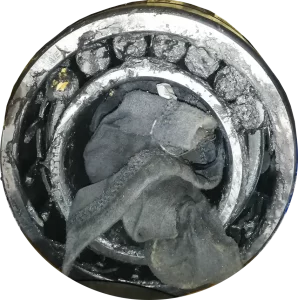
Image: Failed steel cage spherical roller bearing showing typical damage pattern
The repetitive nature of these failures prompted the OEM to seek engineering expertise to identify the root cause and develop a sustainable solution to prevent future incidents and associated downtime.
Investigation Process
Engineering team conducted a comprehensive analysis of the application environment and bearing performance parameters:
- Temperature Analysis: Monitored operating temperatures across various service conditions
- Rotational Speed: Documented RPM ranges during typical service cycles
- Load Profile: Calculated both static and dynamic loads during operation
- Environmental Assessment: Evaluated exposure to moisture, contaminants, and vibration
The investigation revealed that the wheel-end bearings were experiencing load spikes and shock conditions beyond what was optimal for steel cage designs. While the spherical roller bearing type was appropriate for the application, the cage material was identified as the critical factor in the recurring failures and breakage of the bearing.
Solution Development
Based on our analysis, engineering team recommended replacing the steel cage spherical roller bearings with brass cage variants. This recommendation was founded on several technical advantages:
| Property | Steel Cage | Brass Cage |
| Shock Resistance | Moderate | Excellent |
| Load Capacity under Variable Conditions | Good | Superior |
| Deformation Resistance | May deform under extreme shock | Maintains integrity under shock |
| Heat Dissipation | Standard | Enhanced |
| Friction Characteristics | Standard | Improved |
The brass cage design offers higher resistance to extreme loads and better shock absorption capabilities—critical factors in tram wheel applications where track irregularities and switching points create momentary high-impact loads.
Results & Benefits
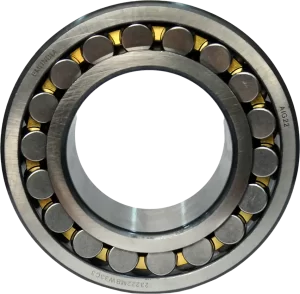
Following implementation of the brass cage spherical roller bearings:
- Extended Service Life: Significant increase in bearing longevity compared to steel cage versions
- Reduced Maintenance: Fewer unplanned maintenance events and associated downtime
- Consistent Performance: More predictable bearing behaviour under variable operating conditions
- Cost Effectiveness: Despite higher initial component cost, reduced total cost of ownership through fewer replacements and maintenance events
Conclusion
This case demonstrates the importance of material selection in bearing applications experiencing extreme or variable loading conditions. While steel cage spherical roller bearings are suitable for many applications, environments with substantial shock loading—like tram wheel-ends—benefit significantly from brass cage alternatives.
Share this Case Study